Healthcare · Wearable · Lifestyle · Full Case Study
AEGIS Protector — Your Personal 25/8 Body Guard
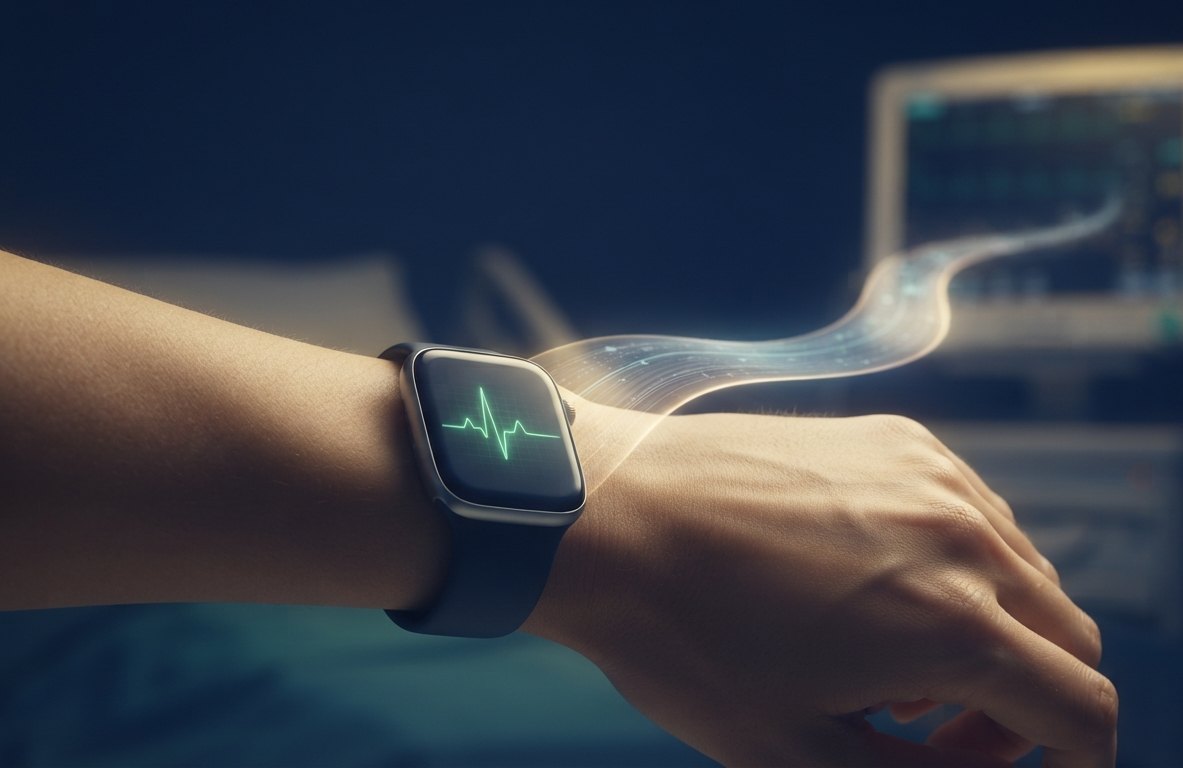
The everyday tier of the AEGIS wearable. It turns the watch you already wear into a continuous,
learning health guardian — learning your normal across rest, work, exercise and
sleep, catching the earliest electrical signs of a heart attack (the K-wave) before you feel a thing, and
keeping you safe. Built for daily life first.
Monitoring shouldn’t begin only once someone is already in a hospital bed. A wearable
meets people where they are — awake, asleep, at home, at work — and never looks away. The reach is only
limited by who can wear a small device, which today is very nearly everyone.
Role
Solo — signal features, Advanced-AI engine, live demo
Learns your personal baseline; catches the K-wave early-warning before symptoms
Learns your normal
AEGIS Protector doesn’t compare you to an average stranger. It builds a personal baseline and keeps
adapting to your lifestyle, so it knows what healthy looks like for you — per activity, hour by
hour. Judging you against yourself is what keeps its alarms meaningful instead of noisy.
Knows what you’re doing
It recognises and blends your activities — rest, walking, exercise, sleep — and judges you against the
normal for what you’re doing now. A high heart rate at the gym isn’t a false alarm;
the same reading lying still is. Context is half of catching trouble early.
Anything-not-normal is flagged
Because it learns normal, it catches any departure — a novelty-detection approach (one-class
SVM / SVR), not just a short pre-programmed list of diseases. New things it has never been shown still
break through, which is exactly what an early-warning guardian needs to do.
Early cardiac warning — the K-wave
A dedicated channel watches for the J-wave / Osborn “K-wave” and ST changes —
among the earliest electrical signs of an impending heart attack — before symptoms are felt. It flags a
beeping K-wave watch alert and, on a real cardiac pattern, an ambulance-siren escalation.
The people who need watching most are often furthest from a machine — the wearable goes where they go.
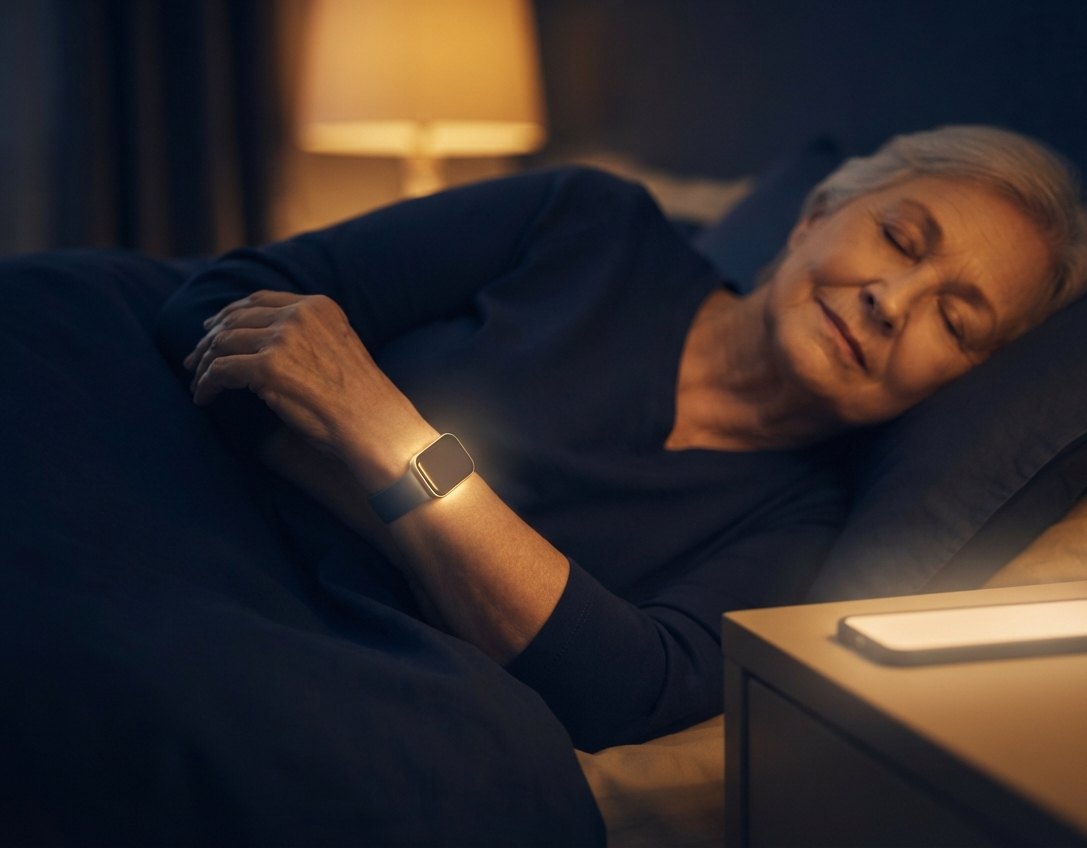
Closer to you than your phone. In a world where more people feel alone, nothing stays
nearer than the device on your body — worn through the day, through the night, through the moments that
matter. You put your phone down; your AEGIS is always with you.
Human-in-command
It flags; a clinician decides. AEGIS Protector improves through governed retraining, never silent
self-adaptation — the same discipline that runs across every AEGIS system. The wearer and the clinician
stay in charge of what happens next.
Beyond the heart — personal safety
Because it’s on the body and always on, it can carry personal-safety functions too — including a
silent duress mode for a robbery or a threat. One device, protecting more than one kind of danger.
Measured, not claimed
The models behind it are the interpretable Support-Vector family the AEGIS programme favours — SVM,
Nu-SVM and SVR, extended with adaptive membership weighting — and every number that matters is measured
subject-independently (the same person is never in both training and test), so the
figures are honest rather than flattering.
Stated plainly, so it stays credible. This is a feasibility demonstration of the
engine, built and validated on open research signals — not a certified medical device. Turning
the K-wave early-warning into a device that calls an ambulance on a real cardiac event requires labelled
clinical data and regulatory validation. The wearable flags; a human, and in time a certified
pathway, decides.
Its clinical sibling. The same engine unlocks a hospital-desktop tier —
AEGIS Clinical — where one clinician watches every patient at once on
a population danger scale. Same device, different job.