
Diagnostic Augmenting Systems

Diagnostics that show their reasoning.
Kinetics-grounded risk stratification, an explicit confidence score, and resource planning across 24 countries — with a clinician in command of every call.
The Diagnostic Augmenting Systems (DAS) series builds clinical screening tools grounded in the physiological kinetics of the disease itself — not statistical thresholds alone. Each system recovers an interpretable risk stratification, surfaces its own uncertainty as a confidence score, and flags the at-risk patient to the medical team while a human clinician stays in command of every call. The series targets the cardio-renal-metabolic cluster — the leading avoidable-readmission driver worldwide.
Systems
 LIVE
LIVE
DRAS — Diabetes Risk
The Diabetes Risk Augmenting System. From a 2-hour OGTT (glucose + insulin) it returns a three-class stratification — Non-diabetic, At-risk, Diabetic — with a confidence level, an SVR-based severity index, a reference hospitalisation risk, and outpatient resource planning. Grounded in the damped-oscillator glucose-insulin kinetics.
Open DRAS Console → LIVE
LIVE
RRAS — Renal Risk
The Renal Risk Augmenting System. From renogram washout kinetics plus a cheap CKD lab panel it returns an obstruction call with a confidence level, an SVR-based severity gauge (estimated eGFR), a reference hospitalisation risk, and renal resource planning. Extends the kinetic method to kidney function — the "R" in the cardio-renal-metabolic cluster, and the natural sequel to diabetes (diabetic nephropathy).
Open RRAS Console →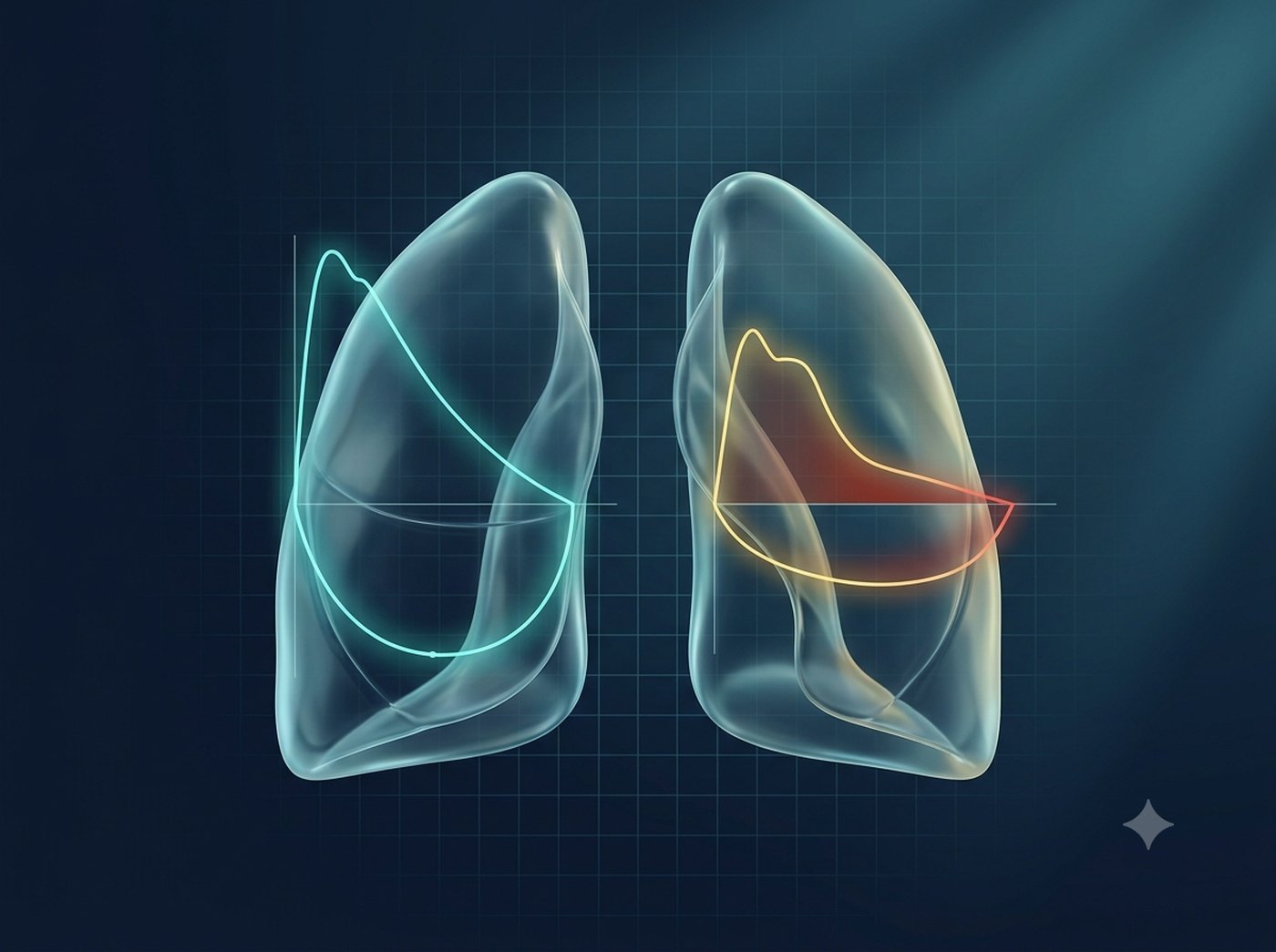 LIVE
LIVE
PRAS — Pulmonary Risk
The Pulmonary Risk Augmenting System. From age, smoking history and two cheap symptom/risk-factor scores it flags who should get a spirometry test — returning a Normal / At-risk / COPD-obstructed call with a confidence level, an estimated FEV1 % predicted, and pulmonary resource planning. Screening-first: it flags the test, it does not replace it — completing the cardio-renal-metabolic panel with the "P".
Open PRAS Console → LIVE
LIVE
CRAS — Cardiac Risk
The Cardiac Risk Augmenting System. Two dimensionless cardiac indices in Prof Ghista's tradition: the CRI screening composite over routine risk factors, and the CFRI — a true nondimensional functional-reserve index (chronotropic reserve, ischaemic ST-strain, anginal threshold) validated against angiographic severity. Distilled SVM+SVR, 24-country resource planning, and the cardiac axis of the unified Λ/Ω engine — the "C" completing the cardio-renal-metabolic-pulmonary panel.
Open CRAS Console → LIVE
LIVE
MDAS — Λ Health-State Index
The Multi-Disease Augmenting System and its front-door number: Λ (Lambda), one dimensionless Chronic-Disease Nondimensional Index that places a patient on the whole continuum — no-disease → at-risk → progressive → critical → death — from a cheap panel, with a trajectory (recovering vs deteriorating). Grounded in Prof D.N. Ghista's Nondimensional Physiological Indices and Dr Loh's thesis DBI / VTI, it fuses the organ indices and routes into DRAS, RRAS and PRAS. The unifier of the diagnostic series.
Open Λ Console → LIVE
LIVE
ORAS — Ocular Risk
The Ocular Risk Augmenting System. One deep-feature pass over a retinal photo screens for diabetic retinopathy, AMD, glaucoma and hypertensive retinopathy — the ODIR-5K baseline raised by four dedicated-data specialists (ROC-AUC 0.90–0.99), each leak-certified and reproducible. Includes a public “Spot the Disease” learning game. Screening-first, human-in-command — the ocular axis of the diagnostic series.
Open Ocular Station →